Welcome to the Department of Mechanical Engineering at ACE Engineering College. Mechanical Engineering is often called the mother of all engineering. Department of Mechanical engineering was established in the year 2011 with intake of students is 60.
The Department of Mechanical Engineering was accredited by the National Board of Accreditation in the year 2018 and 2022. The college was accredited by the NAAC with a ‘A’ grade.
The Department of Mechanical Engineering has highly qualified and well experienced faculties specialized in areas like Engineering Design, Thermal Engineering, Manufacturing Engineering and CAD/CAM.
The Department is well equipped with excellent laboratory facilities with adequate technical supporting staff. Our idea is to be an eminent Centre of Excellence in the field of Mechanical Engineering, where teaching, learning and research synergize to deliver technical education and scientific research for public good. Our task is to create efficient Mechanical Engineers who can compete at the global level. We intend to do this by creating a research hub engaged in contemporary research in association with industries.
The projects and hands-on activities are designed to foster a spirit of entrepreneurship among students and to enable a few to launch their own ventures. The department has qualified and experienced faculty members. The faculty members actively engage in research and constantly publish papers in International and National Journals. The department regularly organizes technical workshops for the faculty members to expose them to emerging areas.
The department has state-of-the art facilities for various laboratories, department library and classrooms to support e-learning. The department has a well-equipped centralized workshop facility which caters to the needs of various departments. Guest lectures and industrial visits are periodically arranged for the students to supplement their curriculum. We strive for all round excellence in students, encouraging them in all extracurricular activities.
Mechanical Engineering is normally considered as the base of all branches of engineering. Today it has crossed its traditional borders and has emerged as a specialization with applications in nanotechnology, biomechanics, material science, energy conservation and much more. This field of study has a vast scope in India and abroad in manufacturing, aerospace and automotive industries. Spanning such multiple ranges of industries, the career opportunities for students pursuing this program is mighty positive. Individuals undertaking this course will be trained in the fields of manufacturing processes, thermodynamics, system engineering, IT, networking, robotics technology and basic shop floor communications. These will help them gain the experience in the various spheres of technology.
A typical Mechanical engineer performs the following tasks:
- Design of mechanical/thermal devices.
- Investigation of equipment failures.
- Hardware implementation and testing of prototypes
- Critical Analysis of test results and improve them accordingly.
- Monitor the manufacturing process of equipment.
In the past few years with the development in Robotics, Artificial Intelligence, and Machine Learning, this core branch has reached new horizons beyond compare. Students pursuing a B. Tech course in Mechanical Engineering undertake new product development using these advanced techniques. In the future, students will mainly study interdisciplinary courses like Mechatronics, Automation which mainly requires knowledge of coding and control systems. Therefore, students joining this B. Tech course shall be eligible for a large spectrum of job profiles compared to others.
A Mechanical engineering graduate is suitable for employment in the sectors of manufacturing industries, maintenance work, automobile manufacturing and maintenance industries, refrigeration industries/air conditioning industries etc.











Accreditation


Vision and Mission

Vision
To be a center of excellence in Mechanical Engineering, producing high-quality professionals and entrepreneurs with ethical values and social concern, while embracing cutting-edge technologies to meet the evolving needs of society.
Mission
M1: To create an excellent teaching-learning environment by providing high-quality technical education that imparts professional skills.
M2: To prepare graduates by providing comprehensive knowledge and experience in state-of-the-art mechanical engineering education, enabling them to become challenging, creative, and innovative professionals in a global environment.
M3: To inculcate professional ethics, social concern, and moral values through an excellent counseling and mentoring system, while promoting the use of cutting-edge technologies to solve real-world problems.
Program Educational Objectives (PEOs)
PEO 1: To impart high quality technical skills and comprehensive knowledge in Mechanical Engineering along with basic sciences, applied mathematics and other disciplines.
PEO 2: To apply modern scientific tools and cutting-edge technologies for designing, modeling, analyzing the real time Mechanical and other allied Engineering problems.
PEO 3: To prepare the students for successful careers in Mechanical Engineering and to cater the needs of Stake holders by imparting social responsibility towards professional ethics, technical, economical and environmental related issues.
PEO 4: To inculcate entrepreneurial skills, leadership qualities, team spirit and lifelong learning to achieve career goals.
Knowledge and Attitude Profile (WK)
WK1: A systematic, theory-based understanding of the natural sciences applicable to the discipline and awareness of relevant social sciences.
WK2: Conceptually-based mathematics, numerical analysis, data analysis, statistics and formal aspects of computer and information science to support detailed analysis and modelling applicable to the discipline.
WK3: A systematic, theory-based formulation of engineering fundamentals required in the engineering discipline.
WK4: Engineering specialist knowledge that provides theoretical frameworks and bodies of knowledge for the accepted practice areas in the engineering discipline; much is at the forefront of the discipline.
WK5: Knowledge, including efficient resource use, environmental impacts, whole-life cost, reuse of resources, net zero carbon, and similar concepts, that supports engineering design and operations in a practice area. WK6: Knowledge of engineering practice (technology) in the practice areas in the engineering discipline.
WK7: Knowledge of the role of engineering in society and identified issues in engineering practice in the discipline, such as the professional responsibility of an engineer to public safety and sustainable development.
WK8: Engagement with selected knowledge in the current research literature of the discipline, awareness of the power of critical thinking and creative approaches to evaluate emerging issues.
WK9: Ethics, inclusive behavior and conduct. Knowledge of professional ethics, responsibilities, and norms of engineering practice. Awareness of the need for diversity by reason of ethnicity, gender, age, physical ability etc. with mutual understanding and respect, and of inclusive attitudes.
Program Outcomes (POs)
PO1: Engineering Knowledge: Apply knowledge of mathematics, natural science, computing, engineering fundamentals and an engineering specialization as specified in WK1 to WK4 respectively to develop to the solution of complex engineering problems.
PO2: Problem Analysis: Identify, formulate, review research literature and analyze complex engineering problems reaching substantiated conclusions with consideration for sustainable development. (WK1 to WK4)
PO3: Design/Development of Solutions: Design creative solutions for complex engineering problems and design/develop systems/components/processes to meet identified needs with consideration for the public health and safety, whole-life cost, net zero carbon, culture, society and environment as required. (WK5)
PO4: Conduct Investigations of Complex Problems: Conduct investigations of complex engineering problems using research-based knowledge including design of experiments, modelling, analysis & interpretation of data to provide valid conclusions. (WK8)
PO5: Engineering Tool Usage: Create, select and apply appropriate techniques, resources and modern engineering & IT tools, including prediction and modelling recognizing their limitations to solve complex engineering problems. (WK2 and WK6)
PO6: The Engineer and The World: Analyze and evaluate societal and environmental aspects while solving complex engineering problems for its impact on sustainability with reference to economy, health, safety, legal framework, culture and environment. (WK1, WK5, and WK7)
PO7: Ethics: Apply ethical principles and commit to professional ethics, human values, diversity and inclusion; adhere to national & international laws. (WK9)
PO8: Individual and Collaborative Team work: Function effectively as an individual, and as a member or leader in diverse/multi-disciplinary teams.
PO9: Communication: Communicate effectively and inclusively within the engineering community and society at large, such as being able to comprehend and write effective reports and design documentation, make effective presentations considering cultural, language, and learning differences
PO10: Project Management and Finance: Apply knowledge and understanding of engineering management principles and economic decision-making and apply these to one’s own work, as a member and leader in a team, and to manage projects and in multidisciplinary environments.
PO11: Life-Long Learning: Recognize the need for, and have the preparation and ability for i) independent and life-long learning ii) adaptability to new and emerging technologies and iii) critical thinking in the broadest context of technological change. (WK8)
Program Specific Outcomes (PSOs)
PSO1: Ability to apply the acquired Mechanical Engineering knowledge for the advancement of society and self.
PSO2: To promote and develop among the students an ambition of life-long learning and to apply them to professional ethics and codes of professional practices
PSO3: To work professionally in industries or as an entrepreneur by applying manufacturing and management practices.
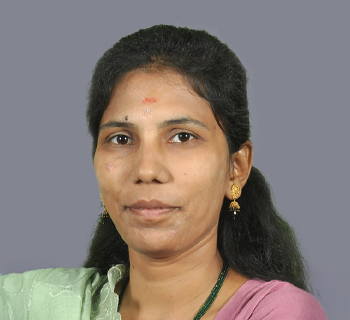
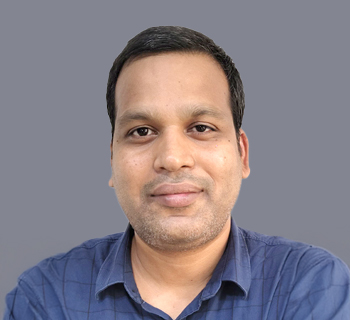
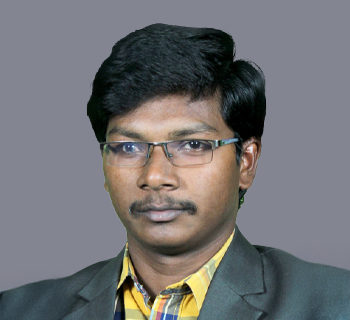
Faculty
| Name of the Programme | MECH | |
|---|---|---|
| Approved Intake (2025) | 30 | |
| No. of Faculty Members | 24 | |
| Cadre | Number | |
| Professor | 02 | |
| Assoc. Professor | 04 | |
| Asst. Professor | 18 | |
| Faculty Profile | Qualification | No. of Faculty |
| Ph.D | 05 | |
| Ph.D (Pursuing) | 04 | |
| Post Graduate | 15 | |
| Technical Staff | Lab Assistant | 06 |







Research and Development
Consultancy
----
Conferences/Journals
-----
Books u0026 Books Chapters
-----
Patents
------
Infrastructure
- 4 Classrooms with Smart Board
- 3 Tutorial Rooms
- 1 Mecazaya(Department Association)
- 1 Department Library
- 1 Seminar Hall
- 13 Laboratories
- 1 HP Server
- 1 DELL Server
- 34 Desktops (with latest configuration)
- UPS Details
- 1 Delta 6kva 16 Batteries
CAD/CAM
| S. No. | Name of the Important Equipment |
|---|---|
| 1 | No. of Systems: 30 |
| 2 | OS: Windows 7 Professional |
| 3 | AUTO CAD |
| 4 | PTC CREO |
| 5 | ANSYS |
| 6 | Mtab XL Turning Machine |
| 7 | Mtab XL Milling Machine |
| 8 | LCD Projector |
Machine Tools
| S. No. | Name of the Important Equipment |
|---|---|
| 1 | Belt Driven Lathe |
| 2 | Milling Machine |
| 3 | Radial Drilling Machine |
| 4 | Shaping Machine |
| 5 | Slotting Machine |
| 6 | Surface Grinding Machine |
| 7 | Power Hacksaw |
Mechanics of Solids
| S. No. | Name of the Important Equipment |
|---|---|
| 1 | Universal Testing Machine |
| 2 | Torsion Testing Machine |
| 3 | Hardness Testing Machine |
| 4 | Spring Testing Machine |
| 5 | Compression Tests On Cube |
| 6 | Impact Testing Machine Punch Shear Test |
Metallurgy and Material Science
| S. No. | Name of the Important Equipment |
|---|---|
| 1 | Tool Makers Microscope |
| 2 | Polishing Stand |
| 3 | Double Disc Polishing Machines |
| 4 | Jominy End Quench Tester and Rockwell Hardness Tester |
| 5 | Belt Grinder |
| 6 | Muffle Furnace |
Metrology
| S. No. | Name of the Important Equipment |
|---|---|
| 1 | Bevel Protractor |
| 2 | Sine Bar Set |
| 3 | Thread Measurement Setup |
| 4 | Gear Tooth Vernier Calipers |
| 5 | Vernier Calipers |
| 6 | Micrometer |
| 7 | Magnetic V Block |
| 8 | Slip Gauges |
| 9 | Internal Micrometer |
Thermo-dynamics Lab
| S. No. | Name of the Important Equipment |
|---|---|
| 1 | Cleveland’s Flash & Fire Point Open Cup Apparatus |
| 2 | Carbon Residue Test Apparatus |
| 3 | Red Wood Viscometer-1 |
| 4 | Saybolt Viscometer Apparatus |
| 5 | Bomb Calorimeter Apparatus |
| 6 | Junkers Calorimeters |
| 7 | Grease Penetration Test |
| 8 | Red Wood Viscometer-2 |
| 9 | Pensky Martens Apparatus |
Thermal Engineering Lab
| S. No. | Name of the Important Equipment |
|---|---|
| 1 | Compressibility Factor Measurement Setup |
| 2 | Two Stroke Engine Cut Section |
| 3 | Four Stroke Diesel Engine Cut Section |
| 4 | Four Stroke 1 Cylinder Diesel Engine with Mechanical Loading |
| 5 | Two Stroke 1 Cylinder Petrol Engine with Electrical Loading |
| 6 | Multi Stage Reciprocating Air Compressor |
| 7 | Four Stroke 1 Cylinder VCR Petrol Engine with Monitoring Test |
Instrumentation and Control Systems
| S. No. | Name of the Important Equipment |
|---|---|
| 1 | Pressure Gauge Setup |
| 2 | Thermistor Setup |
| 3 | LVDT Trainer Setup |
| 4 | Strain Gauge Trainer Setup |
| 5 | J, K Thermocouple Setup |
| 6 | Capacitive Transducer Setup |
| 7 | Photo and Magnetic Pickup Setup |
| 8 | Resistance Temperature Detector Setup |
| 9 | Rotameter Setup |
| 10 | Seismic Pickup Setup |
| 11 | McLeod Gauge Setup |
Fluid Mechanics & Hydraulic Machines
| S. No. | Name of the Important Equipment |
|---|---|
| 1 | Impact of Jets on Vanes Apparatus |
| 2 | Pelton Wheel Turbine |
| 3 | Francis Turbine |
| 4 | Kaplan Turbine |
| 5 | Single Stage Centrifugal Pump |
| 6 | Multi Stage Centrifugal Pump |
| 7 | Reciprocating Pump |
| 8 | Venturi Meter |
| 9 | Orifice Meter |
| 10 | Friction Factor in a Given Pipeline Apparatus |
| 11 | Bernoulli’s Apparatus |
Manufacturing Process Lab
| S. No. | Name of the Important Equipment |
|---|---|
| 1 | Casting – Cope and Drag Box with Necessary Tools |
| 2 | Blow Molding Machine with Die |
| 3 | Injection Molding Machine with Die |
| 4 | Spot Welding Machine |
| 5 | Arc Welding Setup |
| 6 | Brazing Equipment |
| 7 | Permeability Test Apparatus |
| 8 | Plasma Arc Welding Setup |
| 9 | Hydraulic Press and Fly Press |
| 10 | Induction Furnace |
Kinematics & Dynamics Lab
| S. No. | Name of the Important Equipment |
|---|---|
| 1 | Motorized Gyroscopic Couple Apparatus |
| 2 | Universal Governor Apparatus |
| 3 | Static and Dynamic Balancing Analysis |
| 4 | Cam and Follower Apparatus |
| 5 | Whirling Shaft Apparatus |
| 6 | Journal Bearing Apparatus |
| 7 | Simple Pendulum Apparatus |
| 8 | Compound Pendulum Apparatus |
Heat Transfer Lab
| S. No. | Name of the Important Equipment |
|---|---|
| 1 | Composite Wall Apparatus |
| 2 | Heat Transfer Through Lagged Pipe Apparatus |
| 3 | Heat Transfer Through a Concentric Sphere Apparatus |
| 4 | Thermal Conductivity of Metal Rod |
| 5 | Heat Transfer in Pin Fin Apparatus |
| 6 | Transient Heat Conduction |
| 7 | Forced Convection Apparatus |
| 8 | Heat Transfer in Natural Convection Apparatus |
| 9 | Parallel and Counter Flow Heat Exchanger |
| 10 | Emissivity Measurement Apparatus |
| 11 | Stefan Boltzmann Apparatus |
| 12 | Critical Heat Flux Apparatus |
| 13 | Heat Pipe Demonstrator |
| 14 | Film & Drop Condensation Apparatus |
Engineering Workshop
| S. No. | Name of the Important Equipment |
|---|---|
| 1 | Tin Smithy |
| 2 | Carpentry |
| 3 | House Wiring |
| 4 | Fitting |
| 5 | Black Smithy |
| 6 | Anvil 50 Kg |
| 7 | Swage Block |
| 8 | Surface Plate 18" X 18" |
| 9 | Open Hearth Furnace |
| 10 | Wood Turning Lathe |
| 11 | Arc Welding Machine |
Advisory Board Members
| S.No | Designation Head | Name of the Person | Details of the Person |
|---|---|---|---|
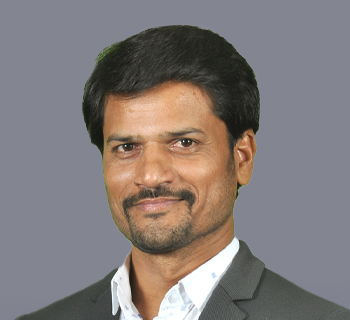
| 1 | Head of the Department | Dr. M. Nitin Kumar | Associate Professor & HOD |
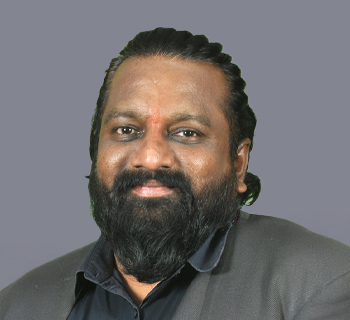
| 2 | Senior Faculty Members | Dr. G. Bala Raju | Professor |
| Dr. M. Sandeep | Associate Professor | ||
| Dr. Kore Mahesh | Associate Professor | ||
| Mr. D. Jagan | Assistant Professor | ||
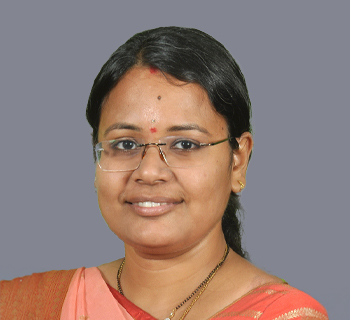
| 3 | Project coordinator | Ms. Reeti Mukherjee | Assistant Professor |
| 4 | Students | Mr. B. Sravan Kumar | IV Mechanical |
| Ms. CH. Trisha | IV Mechanical | ||
| Ms. M. Pavani | IV Mechanical | ||
| Mr. B. Suresh | IV Mechanical | ||
| 5 | Parents | Aruna Jyothi | Govt Gurukula Teacher |
| Mangalpally Yakaiah | Govt. Teacher | ||
| 6 | Alumni | MD. Abrar | BYJUS, Business Development Associate |
| Mr. B. Sandeep | Trainee Engineer, TCS Hyderabad | ||
| 7 | Professional Bodies Member | Dr. Sri Ram Venkatesh | Professor of Mechanical Engineering, UCE Osmania University Hyderabad |
| Dr. K Sridhar Reddy | Professor of Mechanical Engineering, JNTU Karimnagar | ||
| 8 | Employers | Dr. P. Srinivasa Rao | Manager, Technical Training, Cyient Limited |
| Mr. A. Dayanada Reddy | Managing Director, Vasantha Tool Crafts Pvt. Ltd, Jeedimetla Hyderabad | ||
| 9 | Management | Prof. Y. V. Gopala Krishna Murthy | General Secretary, ACE Engineering College |
Placements Highlights - 2021 - 25

72
Campus Interviews Conducted

9
Programs Available for the Students

46.38L
Highest Package 46.38LPA in Amazon

434
Successful Campus Placements
Our Tap Recuiters







Roll Of Honour

Garnepally Thirumal
H : No : 22AG5A0303
BATCH : 2021-2025

Kodityala Laxmi Narsimha
H : No : 21AG5A0307
BATCH : 2020-2024

Porandla Nithin
H : No : 21AG5A0309
BATCH : 2020-2024

Rachakonda Soman Dixit Subramaniyam
H : No : 19AG1A0318
BATCH : 2019-2023

G Radhakrishna
H : No : 19AG5A0319
BATCH : 2018-2022

K Saketh Reddy
H : No : 17AG1A0382
BATCH : 2017-2021

S Shiva Kumar Goud
H : No : 17AG5A0321
BATCH : 2016-2020

Jince Joseph
H : No : 15AG1A0372
BATCH : 2015-2019

G Sashank
H : No : 14AG1A0393
BATCH : 2014-2018

Chinthoju Karthik Kumar
H : No : 13AG1A0325
BATCH : 2013-2017

Ganapuram Rakshith
H : No : 12AG1A0338
BATCH : 2012-2016

Shubham Arvind Tupkar
H : No : 11AG1A0352
BATCH : 2011-2015