
INTRODUCTION
As technology continues to evolve at an unprecedented pace, the demand for professionals skilled in data science has skyrocketed. One field that has witnessed a significant transformation is Computer Science and Engineering (CSE) departments in engineering colleges. With the emergence of data-driven decision making and the increasing importance of big data analytics, CSE departments have incorporated data science as a crucial component of their curriculum.
THE GROWING IMPORTANCE OF DATA SCIENCE
Data science has emerged as a critical discipline in today’s digital age. It involves extracting actionable insights from vast amounts of structured and unstructured data, enabling organizations to make informed decisions and gain a competitive edge. Industries such as finance, healthcare, marketing, and e-commerce heavily rely on data science to optimize their operations, improve customer experiences, and drive innovation.
ABOUT ACE ENGINEERING COLLEGE CSE (DATA SCIENCE) DEPARTMENT
With the rapid evolution of technology and the increasing amount of available data, the demand for professionals skilled in data science has grown exponentially. Our CSE (Data Science) department aims to meet this demand by providing a comprehensive curriculum that prepares students with the essential skills and knowledge needed for success in this field.
At the core of our department’s vision is the belief that data is at the heart of innovation and informed decision-making. Our faculty members, who are renowned experts in their respective fields, are committed to imparting the latest methodologies and industry best practices to our students. They continuously engage in research, ensuring that our curriculum remains up-to-date and aligned with current industry requirements.
The department is home to a group of highly skilled and experienced faculty members with knowledge in a variety of subjects. Two of the faculty members have doctorates, and one is currently obtaining a Ph.D. In addition, three faculty members are enrolled in the University of Hyderabad’s Artificial Intelligence and Machine Learning Diploma program.
Duration: 4 years (Regular) / 3 years (Lateral Entrance)
No. of Semesters: 8 (Regular) / 6 (Lateral Entrance)
No. of Seats: Total – 180 (Status of NRI Approval – Yes)
Eligibility: Education is based on the 10+2 system. Student must have passed the subjects of Physics, Chemistry, and Mathematics in the qualifying examination
Scope for Higher Studies: M.E. / M.Tech / M.B.A./ M.S.
The CSE department specializing in Data Science has impressive facilities and a fully equipped computer lab that is tailored to the unique requirements of our data science students. We offer an abundant range of resources, such as advanced computing clusters and access to various datasets, allowing students to gain practical experience and enhance their problem-solving abilities.
The department encourages students to actively participate in research projects and engage in internships with leading organizations. These opportunities provide invaluable experiences and allow students to apply the knowledge they acquire in real-world settings. Additionally, we facilitate workshops, seminars, and guest lectures by industry professionals to bridge the gap between academia and industry, allowing students to expand their network and stay abreast of the latest trends and developments.
Collaboration is a key aspect of our department’s ethos, and we actively foster interdisciplinary partnerships within the institution and with external organizations. This collaborative approach serves to enhance the scope of research and enrich the learning environment, enabling students to tackle complex, real-world problems that require cross-domain expertise.
Graduates from our CSE (Data Science) department are well-positioned for exciting career opportunities in various sectors, including technology, finance, healthcare, and more. Armed with a deep understanding of data analytics, statistical modelling, and machine learning algorithms, our graduates are sought after by industry leaders for their analytical and problem-solving skills.
Finally, our engineering college’s CSE (Data Science) department is an ideal place for ambitious data scientists. Our education program encompasses both theoretical learning and hands-on experience, enabling students to develop expertise in the field of data science. Through top-notch faculty, state-of-the-art facilities, and a collaborative mindset, we empower our students with the necessary resources to make innovative advancements in the continuously evolving realm of data science.
OBJECTIVES:
- To equip the students with strong fundamental concepts, analytical capability, programming and problem solving skills.
- To create an academic environment conducive for higher learning through student training, self learning, sound academic practices and research
endeavors. - To make the students industry ready and to enhance their employability through training and internships. To make students job-ready by applying what you learn and building real-life projects
- To improve department industry collaboration through interaction including participation in professional society activities, guest lecturers and industrial visit.
- To provide opportunities in order to promote organizational and leadership skills in students through various co-curricular and extra – curricular activities











Accreditation


Vision and Mission

Vision
To be a centre of excellence in Computer Science and Data Science education by producing competent engineers with strong analytical and research skills, entrepreneurial abilities, ethical values, and the capability to address global technological and societal challenges.
Mission
- M1: Provide strong foundations in Computer Science, Data Science, Artificial Intelligence, and Machine Learning through quality teaching–learning processes and modern laboratory facilities.
- M2: Develop analytical thinking, problem-solving abilities, and programming skills to address real-world data-driven challenges.
- M3: Encourage research, innovation, and entrepreneurship in emerging technologies of data science and computing.
- M4: Prepare students for higher education, global careers, and industry requirements through professional training, industry interaction, and lifelong learning.
- M5: Promote ethical values, leadership, teamwork, and social responsibility in professional practice.
Program Educational Objectives (PEOs)
-
- To introduce the fundamentals of science and engineering concepts essential for a data architect / data scientist.
- To inculcate the knowledge of mathematical foundations and algorithmic principles for effective problem solving.
- To provide knowledge in data science for modern computational data analysis and modeling methodologies.
- To provide the knowledge in artificial intelligence techniquesand apply them to develop relevant models and real time products.
- To impart knowledge to analyze, design, test and implement the model required for various applications.
- To hone personality skills, trigger social commitment and inculcate societal responsibilities.
Knowledge and Attitude Profile (WK)
WK1: A systematic, theory-based understanding of the natural sciences applicable to the discipline and awareness of relevant social sciences.
WK2: Conceptually-based mathematics, numerical analysis, data analysis, statistics and formal aspects of computer and information science to support detailed analysis and modelling applicable to the discipline.
WK3: A systematic, theory-based formulation of engineering fundamentals required in the engineering discipline.
WK4: Engineering specialist knowledge that provides theoretical frameworks and bodies of knowledge for the accepted practice areas in the engineering discipline; much is at the forefront of the discipline.
WK5: Knowledge, including efficient resource use, environmental impacts, whole-life cost, reuse of resources, net zero carbon, and similar concepts, that supports engineering design and operations in a practice area. WK6: Knowledge of engineering practice (technology) in the practice areas in the engineering discipline.
WK7: Knowledge of the role of engineering in society and identified issues in engineering practice in the discipline, such as the professional responsibility of an engineer to public safety and sustainable development.
WK8: Engagement with selected knowledge in the current research literature of the discipline, awareness of the power of critical thinking and creative approaches to evaluate emerging issues.
WK9: Ethics, inclusive behavior and conduct. Knowledge of professional ethics, responsibilities, and norms of engineering practice. Awareness of the need for diversity by reason of ethnicity, gender, age, physical ability etc. with mutual understanding and respect, and of inclusive attitudes.
Program Outcomes (POs)
PO1: Engineering Knowledge: Apply knowledge of mathematics, natural science, computing, engineering fundamentals and an engineering specialization as specified in WK1 to WK4 respectively to develop to the solution of complex engineering problems.
PO2: Problem Analysis: Identify, formulate, review research literature and analyze complex engineering problems reaching substantiated conclusions with consideration for sustainable development. (WK1 to WK4)
PO3: Design/Development of Solutions: Design creative solutions for complex engineering problems and design/develop systems/components/processes to meet identified needs with consideration for the public health and safety, whole-life cost, net zero carbon, culture, society and environment as required. (WK5)
PO4: Conduct Investigations of Complex Problems: Conduct investigations of complex engineering problems using research-based knowledge including design of experiments, modelling, analysis & interpretation of data to provide valid conclusions. (WK8)
PO5: Engineering Tool Usage: Create, select and apply appropriate techniques, resources and modern engineering & IT tools, including prediction and modelling recognizing their limitations to solve complex engineering problems. (WK2 and WK6)
PO6: The Engineer and The World: Analyze and evaluate societal and environmental aspects while solving complex engineering problems for its impact on sustainability with reference to economy, health, safety, legal framework, culture and environment. (WK1, WK5, and WK7)
PO7: Ethics: Apply ethical principles and commit to professional ethics, human values, diversity and inclusion; adhere to national & international laws. (WK9)
PO8: Individual and Collaborative Team work: Function effectively as an individual, and as a member or leader in diverse/multi-disciplinary teams.
PO9: Communication: Communicate effectively and inclusively within the engineering community and society at large, such as being able to comprehend and write effective reports and design documentation, make effective presentations considering cultural, language, and learning differences
PO10: Project Management and Finance: Apply knowledge and understanding of engineering management principles and economic decision-making and apply these to one’s own work, as a member and leader in a team, and to manage projects and in multidisciplinary environments.
PO11: Life-Long Learning: Recognize the need for, and have the preparation and ability for i) independent and life-long learning ii) adaptability to new and emerging technologies and iii) critical thinking in the broadest context of technological change. (WK8)
Program Specific Outcomes (PSOs)
PSO1: Understand, analyze and develop essential proficiency in the areas related to data science in terms of underlying statistical and computational principles and apply the knowledge to solve practical problems.
PSO2: Implement data science techniques such as search algorithms, neural networks, machine learning and data analytics for solving a problem and designing novel algorithms for successful career and entrepreneurship.
Faculty
| Name of the Programme | CSE (Data Science) | |
|---|---|---|
| Approved Intake (2025) | 180 | |
| No. of Faculty Members | 29 | |
| Cadre | Number | |
| Professor | 01 | |
| Assoc. Professor | 06 | |
| Asst. Professor | 22 | |
| Faculty Profile | Qualification | No. of Faculty |
| Ph.D | 03 | |
| Ph.D (Pursuing) | 14 | |
| Post Graduate | 13 | |
| Technical Staff | Technical Staff | 01 |
| Programmers | 04 | |
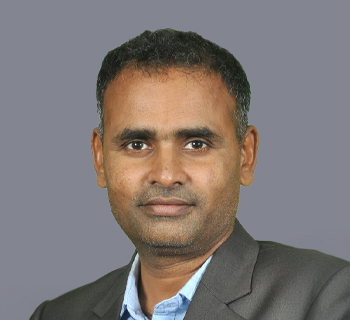




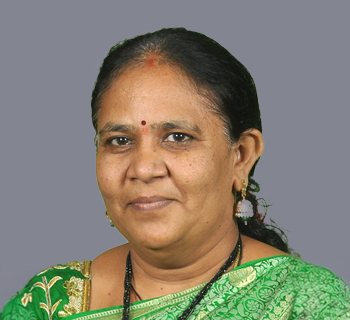


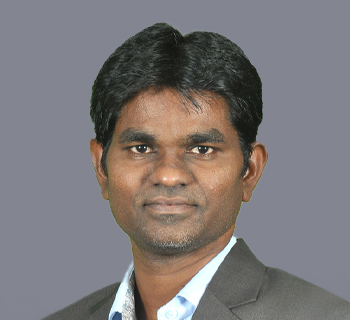



















Research and Development
Consultancy
u003cpu003eu002du002du002du002du003c/pu003e
Conferences/Journals
u003cpu003eu002du002du002du002d-u003c/pu003e
Books u0026 Books Chapters
u003cpu003eu002du002du002du002d-u003c/pu003e
Patents
u003cpu003eu002du002du002du002du002du002du003c/pu003e
Infrastructure
As the digital world becomes increasingly data-driven, the Department of CSE (Data Science) at ACE Engineering College addresses the surging demand for professionals skilled in big data analytics, AI, and intelligent decision-making. The department offers a comprehensive and future-ready B.Tech programme that builds strong foundations in data science through rigorous training in mathematics, statistics, machine learning, data visualisation, and cloud-based technologies.
GPU SERVER CONFIGURATION
| GPU SERVER CONFIGURATION | |
|---|---|
| Hardware configuration | Dell OptiPlex 7080 Tower with 500W upto 92% efficiency PSU Intel Core i7 10700 10th Generation 32GB DDR4 RAM, M.2 256SSD, 1TB HDD, NVIDIA GeForce RTX 2070 Super 8GB Dell wired keyboard, Windows 10 pro (64bit) |
| Operating System | Windows10, Ubuntu 16.04. |
| Open-Source Tools | Python 3.6.5, R-Language, OpenCV, C, C++, JAVA. |
| Licensed Tools | Oracle 12.1.0.2.0 with analytics. |
| Other resources | High Speed Internet, Projector, White Board, Intercom |
Client system Configuration
| S.No | Name |
|---|---|
| 1 | Example Name |
| 2 | Example Name |
Advisory Board Members
--------------------------------------------------------------------------------------------------------------------------------------------
Placements Highlights - 2021 - 25

72
Campus Interviews Conducted

9
Programs Available for the Students

46.38L
Highest Package 46.38LPA in Amazon

434
Successful Campus Placements
Our Tap Recuiters







Roll Of Honour
| S.No | Batch | Hall Ticket Number | Student Name | CGPA/Percentage | Photograph |
| 1 | 2020-2024 | 20AG1A6703 | AENUGU AKSHITHA | 9.26 |  |