About Department
The field of artificial intelligence encompasses the study and advancement of computer systems that possess the capability to replicate human-like cognitive abilities such as visual perception, speech recognition, decision-making, translation, and interpretation.
The application of machine learning is a systematic approach to analyzing data that enables the automated construction of analytical models. The global adoption of artificial intelligence and machine learning (AI/ML) continues to expand as organizations recognize its value in facilitating business transformation. In their pursuit of agility, resilience, innovation, and scalability within their business transformation efforts, organizations around the world are increasingly incorporating artificial intelligence and machine learning (AI/ML) methodologies.
In light of the aforementioned context, ACE Engineering College presents a comprehensive and robust four-year undergraduate program in B.Tech CSE (AI & ML) with a current intake of 180 students. This program aims to establish a strong educational foundation by incorporating fundamental principles and cutting-edge technologies associated with various domains of Artificial Intelligence. By immersing students in these principles and cutting-edge technologies, we prepare them for an advanced understanding of this field.
Through the comprehensive curriculum offered, students will develop the proficiency to create sophisticated solutions for a diverse array of intricate challenges across various industries and contexts. Furthermore, they will have the opportunity to explore newly emerging areas such as neural networks, natural language processing, robotics, deep learning, computer vision, logical reasoning methods, alongside innovative problem-solving techniques. This multifaceted approach equips students with in- depth knowledge and understanding of complex challenges in today’s ever-evolving technological landscape.
This program is designed for students aiming to acquire in-depth knowledge and proficiency in Artificial Intelligence, Machine Learning, and other emerging technologies. By developing expertise in these fields that demonstrate significant potential, individuals can differentiate themselves and enhance their professional trajectory within the dynamic technological landscape.
Short term Goals
- To establish state-of-the-art GPU cluster facilities in the Center for Artificial Intelligence and Machine Learning.
- To encourage faculty to publish research papers in reputed international journals indexed by Scopus, Web of Science, and UGC.
- To introduce best practices to enhance the teaching-learning process.
- To organize international conferences and workshops in association with Springer, ACM, and IEEE journals.
Long Term Goals
- To achieve self-sufficiency through R&D and consultancy by securing funded projects from UGC, DST, AICTE, and MHRD.
- To gain recognition and achieve teaching excellence in the field of Artificial Intelligence and Machine Learning.
- To develop research activities and organize Ph.D. programs in the field of Artificial Intelligence and Machine Learning.











Accreditation


Vision and Mission

Vision of the Department
To be an epicentre of excellence in education by offering cutting-edge technologies, research, and product-based opportunities to students, enabling them to succeed in global professional competitions with a foundation of core knowledge, entrepreneurial skills, ethical values, and social responsibility.
Mission of the Department
Imparting quality technical education to young computer engineers by providing them
- M1: Impart quality technical education with state-of-the-art laboratories, analytical and core technical skills of international standards, delivered by qualified and experienced faculty.
- M2: Prepare students for global professional competitions, examinations for higher studies, and employment in product-based companies.
- M3: Develop professional attitudes, research aptitude, critical reasoning, problem-solving skills, and technical consultancy capabilities by providing training in cutting-edge technologies.
- M4: Promote and nurture knowledge, lifelong learning, entrepreneurial practices, ethical values, and social responsibility.
Program Educational Objectives (PEOs)
PEO 1: To prepare students for successful careers in CSE (Artificial Intelligence and Machine Learning) by providing training to excel in competitive examinations, pursue higher education, and secure employment.
PEO 2: To provide students with a broad-based curriculum, firmly grounded in Computer Science and Engineering, Applied Mathematics, and Sciences. To impart high-quality technical skills for designing, modelling, analysing, and solving critical problems with global competence.
PEO 3: To inculcate professional, social, and ethical values, along with effective communication skills and entrepreneurial practices, for the holistic growth of students.
PEO 4: To create an academic environment for Computer Science and Engineering students that fosters involvement in professional bodies, encourages a multidisciplinary approach, and promotes lifelong learning.
PEO 5: To develop research aptitude among students, enabling them to carry out research in cutting-edge technologies, solve real-world problems, and provide technical consultancy services.
Knowledge and Attitude Profile (WK)
WK1: A systematic, theory-based understanding of the natural sciences applicable to the discipline and awareness of relevant social sciences.
WK2: Conceptually-based mathematics, numerical analysis, data analysis, statistics and formal aspects of computer and information science to support detailed analysis and modelling applicable to the discipline.
WK3: A systematic, theory-based formulation of engineering fundamentals required in the engineering discipline.
WK4: Engineering specialist knowledge that provides theoretical frameworks and bodies of knowledge for the accepted practice areas in the engineering discipline; much is at the forefront of the discipline.
WK5: Knowledge, including efficient resource use, environmental impacts, whole-life cost, reuse of resources, net zero carbon, and similar concepts, that supports engineering design and operations in a practice area. WK6: Knowledge of engineering practice (technology) in the practice areas in the engineering discipline.
WK7: Knowledge of the role of engineering in society and identified issues in engineering practice in the discipline, such as the professional responsibility of an engineer to public safety and sustainable development.
WK8: Engagement with selected knowledge in the current research literature of the discipline, awareness of the power of critical thinking and creative approaches to evaluate emerging issues.
WK9: Ethics, inclusive behavior and conduct. Knowledge of professional ethics, responsibilities, and norms of engineering practice. Awareness of the need for diversity by reason of ethnicity, gender, age, physical ability etc. with mutual understanding and respect, and of inclusive attitudes.
Program Outcomes (POs)
PO1: Engineering Knowledge: Apply knowledge of mathematics, natural science, computing, engineering fundamentals and an engineering specialization as specified in WK1 to WK4 respectively to develop to the solution of complex engineering problems.
PO2: Problem Analysis: Identify, formulate, review research literature and analyze complex engineering problems reaching substantiated conclusions with consideration for sustainable development. (WK1 to WK4)
PO3: Design/Development of Solutions: Design creative solutions for complex engineering problems and design/develop systems/components/processes to meet identified needs with consideration for the public health and safety, whole-life cost, net zero carbon, culture, society and environment as required. (WK5)
PO4: Conduct Investigations of Complex Problems: Conduct investigations of complex engineering problems using research-based knowledge including design of experiments, modelling, analysis & interpretation of data to provide valid conclusions. (WK8)
PO5: Engineering Tool Usage: Create, select and apply appropriate techniques, resources and modern engineering & IT tools, including prediction and modelling recognizing their limitations to solve complex engineering problems. (WK2 and WK6)
PO6: The Engineer and The World: Analyze and evaluate societal and environmental aspects while solving complex engineering problems for its impact on sustainability with reference to economy, health, safety, legal framework, culture and environment. (WK1, WK5, and WK7)
PO7: Ethics: Apply ethical principles and commit to professional ethics, human values, diversity and inclusion; adhere to national & international laws. (WK9)
PO8: Individual and Collaborative Team work: Function effectively as an individual, and as a member or leader in diverse/multi-disciplinary teams.
PO9: Communication: Communicate effectively and inclusively within the engineering community and society at large, such as being able to comprehend and write effective reports and design documentation, make effective presentations considering cultural, language, and learning differences
PO10: Project Management and Finance: Apply knowledge and understanding of engineering management principles and economic decision-making and apply these to one’s own work, as a member and leader in a team, and to manage projects and in multidisciplinary environments.
PO11: Life-Long Learning: Recognize the need for, and have the preparation and ability for i) independent and life-long learning ii) adaptability to new and emerging technologies and iii) critical thinking in the broadest context of technological change. (WK8)
Program Specific Outcomes (PSOs)
PSO1: To prepare students for industry readiness by providing the necessary training in cutting-edge technologies.
PSO2: An ability to use core concepts of computing and optimization techniques to develop more efficient and effective computing mechanisms.
Faculty








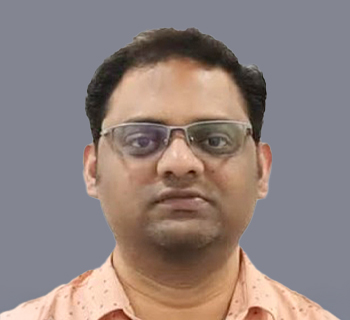

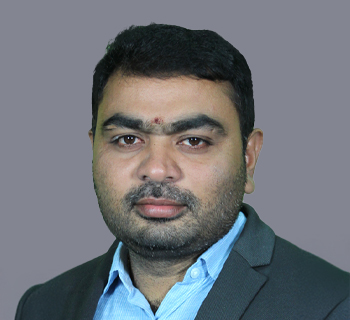



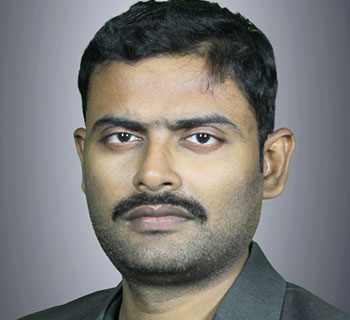

Research and Development
Paper Publications
------
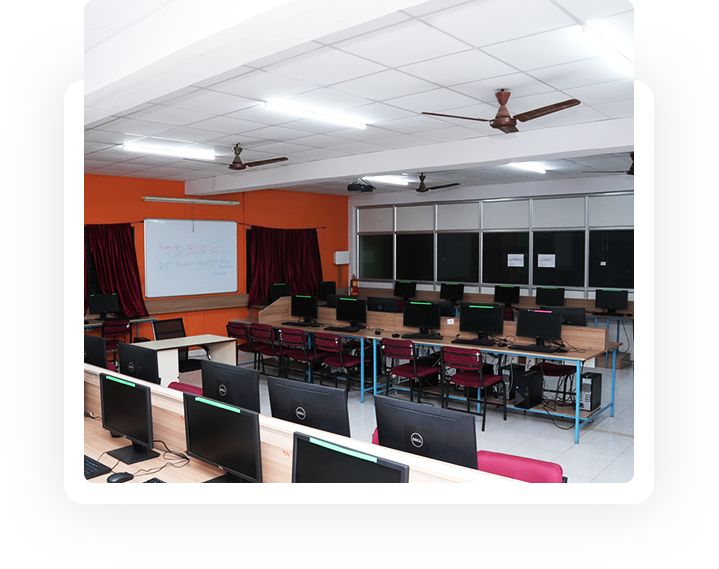
Infrastructure
Classrooms
- Type: Smart Classroom
- Seating Capacity: 70
- Facilities: Projector, Smart Board, Wi-Fi
Laboratories
| Laboratory | Desktop Systems | Software / Tools |
|---|---|---|
| Natural Language Processing Lab | 30 | Python, Jupyter Notebook, NLTK |
| Data Analytics Lab | 30 | R Studio, Python, Jupyter Notebook |
| DevOps / Internship Lab | 30 | GitHub, Jenkins, Docker, Kubernetes, Selenium |
| DBMS Lab | 30 | MySQL |
| Java Programming Lab | 30 | JDK |
| Prolog / Lisp Lab | 30 | LISP, Prolog Compilers, Jupyter Notebook |
| Data Structures Lab | 30 | C Compiler |
| Operating Systems Lab | 30 | C Compiler |
| Web Technologies Lab | 30 | MySQL, Python, React JS, Node JS, JDK |
| Software Engineering Lab | 30 | Star UML |
| Computer Networks Lab | 30 | C Compiler, Nmap, Wireshark, NS2 |
| Machine Learning Lab | 30 | Python IDE |
| UI Design (Flutter) | 30 | Android Studio, Flutter |
Internet Facilities
- Internet Speed: 100 Mbps
- Connection Type: Broadband / Fiber
- Wi-Fi Coverage: Entire Department
- Firewall Security: Enabled
Seminar Hall
- Seating Capacity: 500
- Facilities: Projector, Audio System, Wi-Fi
- Usage: Workshops, Guest Lectures, Seminars, Project Presentations
Research Areas
- Artificial Intelligence
- Machine Learning
- Deep Learning
- Computer Vision
- Natural Language Processing
- Data Science
- Big Data Analytics
Library Resources
- 592 Titles and 4500 Textbooks
- Print Journals and National Journals
- Newspapers
- DELNET and e-Books
Advisory Board Members
| S No. | Name of the Member | Designation | Position in BOS |
|---|---|---|---|
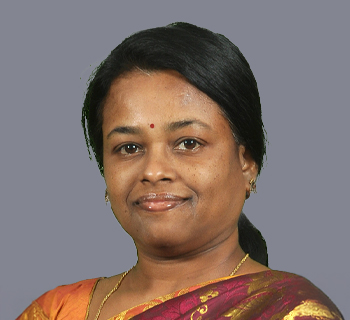
| 1 | Dr. S. Kavitha | Head of the Department | Chairman |
| 2 | Dr. D. Ramesh | Professor, CSE, JNTUH, Jagital | JNTUH Nominee |
| 3 | Dr. T Ramakrishna | Associate Professor, NIT Warangal | Subject Experts outside JNTUH |
| 4 | Dr. A. Sree Lakshmi | Associate Professor, Dept of CSE(AI&DS), ICFAI Tech (Faculty of Science and Technology), ICFAI Foundation for Higher Education | Subject Experts outside JNTUH |
| 5 | Mr. S. Sri Ramachandrudu | Senior Lead Consultant, Hinduja Group | Expert on Trending Technology |
| 6 | Mr. Durga Naveen Kandregula | Founder & CEO, Coign Consultants Pvt Ltd. | Industry/Corporate Sector Representative |
| 7 | Mr. Sk Hussain | Associate Software Development Engineer, CAW Studios Pvt Ltd. | Alumni |
Internal BOS Members:
| S.No. | Name of the Faculty | Designation | Category |
|---|---|---|---|
| 1 | Dr. Atul Kumar Ramotra | Assoc. Professor | Member Secretary |
| 2 | Ms. P. Kamakshi Thai | Asst. Professor | Internal Member |
| 3 | Ms. J. Bhargavi | Asst. Professor | Internal Member |
| 4 | Mr. R. Rajesh | Asst. Professor | Internal Member |
| 5 | Mr. SH. Krishnanand | Asst. Professor | Internal Member |
| 6 | Mr. Durgunala Ranjith | Asst. Professor | Internal Member |
| 7 | Mr. A. Sasiram | Asst. Professor | Internal Member |
Placements Highlights - 2021 - 25

72
Campus Interviews Conducted

9
Programs Available for the Students

46.38L
Highest Package 46.38LPA in Amazon

434
Successful Campus Placements
Our Tap Recuiters







Roll Of Honour

PUTNALA SRAVYA
H : No : 20AG1A6648

PAMUJULA LAKSHMI PRIYA
H : No : 20AG1A6646

KORAPALA SUSHMA
H : No : 20AG1A6632

KASA DEEPIKA
H : No : 20AG1A6628

BATTU RASHMITHA
H : No : 20AG1A6608

AILENI ANILKUMAR
H : No : 20AG1A6603

K V S SAI PREM KUMAR
H : No :20AG1A6622

PADAM SINDHU
H : No : 20AG1A6645

MARAGONI BHAVYA
H : No : 20AG1A6638

ALLAM AKSHITHA
H : No : 20AG1A6605
Syllabus
R25 Syllabus
R24 Syllabus
R22 Syllabus
R20 Syllabus
Frequently Asked Questions
Wondering what to expect from your chosen branch of engineering? Explore these FAQs to learn more about academics, labs, placements, and beyond.
How is the AI & ML program different from general CSE?
This program focuses deeply on intelligent systems, machine learning, data science, and AI-based solutions, in addition to core computer science fundamentals.
What tools and technologies are taught in this specialization?
Students work with Python, TensorFlow, Keras, R, Jupyter, Google Colab, and cloud-based ML platforms like AWS and Azure.
Are students involved in real-world AI projects?
Yes, the department emphasizes project-based learning and research in areas like computer vision, NLP, and predictive analytics.
Do students get industry exposure during the program?
Through expert talks, internships, and workshops with AI professionals, students gain practical industry insights and exposure.
What job roles can AI & ML graduates expect?
Graduates are equipped for roles like Machine Learning Engineer, Data Scientist, AI Analyst, NLP Engineer, and Software Developer with AI focus.