Why Choose Information Technology at ACE?
Established with a sanctioned intake of 60 students, the Department of Information Technology at ACE Engineering College is committed to producing industry-ready graduates equipped with both strong technical foundations and future-facing skills. The department focuses on holistic development, nurturing a spirit of innovation, teamwork, and social responsibility.
A balanced faculty team, combining experience with youthful energy, ensures dynamic and effective teaching. The department continuously evolves by integrating emerging trends in IT, offering a learner-friendly environment that fosters research, innovation, and active student participation in technical seminars, workshops, and inter-college events.
Students benefit from internships, certification programmes, and skill enhancement courses aligned with current industrial demands. Infrastructural support includes modern classrooms, smart boards, licensed software, and a strong internet backbone to facilitate hands-on learning and real-time project development.
Accreditation


Vision & Mission

Our Vision
To be the center of excellence in technical education with a commitment to the Nation.
Our Mission
- Quality technical education with state-of-the-art laboratories, analytical and technical skills guided by qualified and experienced faculty.
- Preparation for competitive examinations and higher studies.
- Development of professional attitude, critical reasoning, and technical consultancy skills through training in cutting-edge technologies.
- Promotion of lifelong learning, entrepreneurial practices, ethical values, and social responsibility.
Curriculum Syllabus
R24 Regulation – IT
R22 Regulation – IT
R22 Regulation – IT
Program Education Objectives
Program Educational Objectives (PEOs)
PEO 1: To prepare the students for successful careers in Information Technology and fulfill the need by providing training to excel in competitive examinations for higher education and employment.
PEO 2: To provide students a broad-based curriculum with a firm foundation in Information Technology, Applied Mathematics & Sciences. To impart high quality technical skills for designing, modeling, analyzing and critical problem solving with global competence.
PEO 3: To inculcate professional, social, ethical, effective communication skills and entrepreneurial practice among their holistic growth.
PEO 4: To provide Information Technology students with an academic environment and members associated with student related to professional bodies for multi-disciplinary approach and for lifelong learning.
PEO 5: To develop research aptitude among the students in order to carry out research in cutting edge technologies, solve real world problems and provide technical consultancy services.
Knowledge and Attitude Profile (WK)
- Apply knowledge of mathematics, science, computing, and engineering fundamentals to solve complex problems.
- Analyse engineering problems through critical evaluation of research and literature.
- Design systems and processes considering health, safety, cultural, societal, and environmental factors.
- Conduct research-based investigations using experimental methods and data analysis.
- Use modern tools for IT and engineering with awareness of their limitations.
- Assess societal and environmental impact of engineering solutions.
- Demonstrate ethical conduct and professional responsibility.
- Perform effectively in diverse and multidisciplinary teams.
- Communicate effectively through reports, presentations, and documentation.
- Apply project management and financial principles in team-based engineering work.
- Engage in independent, lifelong learning and adapt to evolving technologies.
Program Outcomes (POs)
- Apply knowledge of mathematics, science, computing, and engineering fundamentals to solve complex problems.
- Analyse engineering problems through critical evaluation of research and literature.
- Design systems and processes considering health, safety, cultural, societal, and environmental factors.
- Conduct research-based investigations using experimental methods and data analysis.
- Use modern tools for IT and engineering with awareness of their limitations.
- Assess societal and environmental impact of engineering solutions.
- Demonstrate ethical conduct and professional responsibility.
- Perform effectively in diverse and multidisciplinary teams.
- Communicate effectively through reports, presentations, and documentation.
- Apply project management and financial principles in team-based engineering work.
- Engage in independent, lifelong learning and adapt to evolving technologies.
Program Specific Outcomes (PSOs)
- PSO1:Prepare students for industry deployment by providing hands-on training in advanced IT technologies.
- PSO2: Apply computing and optimisation techniques for the development of efficient software solutions.
- PSO3: Foster a strong sense of ethical and societal responsibility among graduates.
Faculty & Research
The department is supported by experienced faculty engaged in academic research, consultancy, and industry-oriented training. Faculty members guide students in final-year projects, encourage paper publications, and conduct technical training sessions aligned with global IT trends.



Infrastructure & Labs
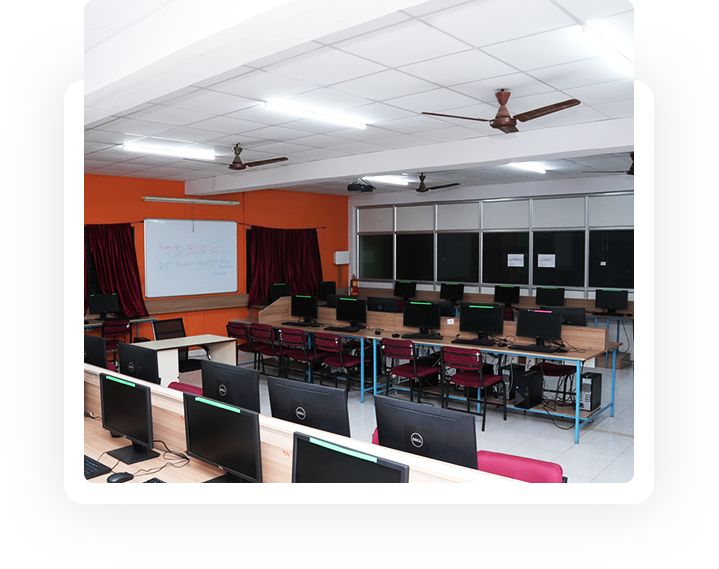
All labs are equipped with Dell desktops, high-speed internet connectivity, and pre-installed industry-relevant software tools to support programming, AI/ML projects, networking labs, and software development.
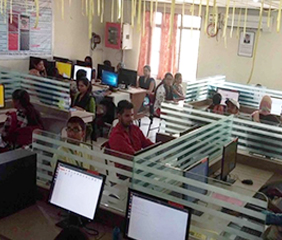
CProgramming Lab
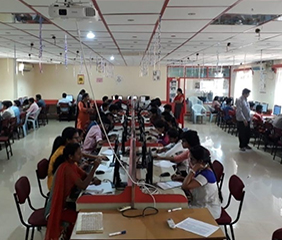
Database Management Lab

Computer Networks Lab
Software Engineering Lab
Placements Highlights - 2021 - 25

72
Campus Interviews Conducted

9
Programs Available for the Students

46.38L
Highest Package 46.38LPA in Amazon

434
Successful Campus Placements
Our Tap Recuiters







Advisory Board Members
Head of the Department
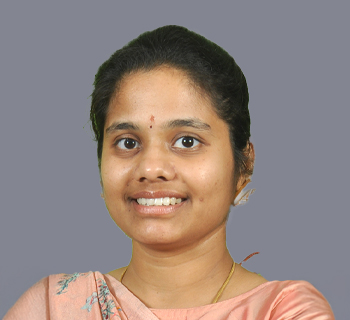
Prof. K. Jaya
Bharathi
Professor & HODIT
Senior Faculty Members
Mr. S. Venu
Gopal
Associate Professor
Mrs. D. Manasa
Associate Professor
Mr. M. Siva Kumar
Associate Professor
Mrs. P.
Soujanya
Associate Professor
Project Coordinators
Mr. G. Prasad
Associate Professor
Students
Potla Uh
Aaravind Sai
IV-IT
Puppala Suchith
III- IT
Tompala
Tanisha
IV- IT
Kasina Bhavani
III- IT
Parents
Mr. Arroju
Srinivas
Biforst
Technologies
PrivateLimited,
Software Engineer
Mr. Sv Ramohan
GVK Power, HR
Alumni
Uppala Monali
Synchrony
E Jayanth
Kore.ai
Professional Bodies Members
Mr. Santosh Kumar Satnami
Secretary, CSI Hyderabad Chapter
Mohammed Jaffer Pasha
Senior Technical Trainer, TASK, Telangana
Employers
Mr.R Kishore Arun
Network
Consulting
Engineer, CISCO
Mr.Pavan M
HR-Head, TCS
Roll Of Honour

A Likhitha
H : No : 21AG1A1201
BATCH : 2021-2025

K.MOUNIKA
H : No : 20AG1A1223
BATCH : 2020-2024

A. VAISHNAVI
H : No : 19AG1A1202
BATCH : 2019-2023
Events & Activities
No upcoming events found.
Frequently Asked Questions
Wondering what to expect from your chosen branch of engineering? Explore these FAQs to learn more about academics, labs, placements, and beyond.
What is the difference between CSE and IT in engineering at ACE?
Both CSE and IT at ACE focus on computing, but CSE IT differs in scope—CSE leans towards programming, algorithms, and system software, while Information Technology focuses more on software applications, networks, databases, and IT services.
Is the CSE IT syllabus at ACE industry-oriented?
Yes, the CSE IT curriculum includes hands-on learning in web development, cybersecurity, cloud computing, and software engineering—aligned with current tech trends and job market needs
What kind of labs and tools are available for CSE IT students?
CSE IT students have access to modern labs equipped with high-speed systems, networking tools, cloud-based platforms, and software used in full-stack and enterprise development.
What are the placement prospects for CSE IT students at ACE?
The Information Technology department at ACE offers strong placement support, with training in coding, aptitude, and interview skills. CSE IT students get recruited into roles such as software engineers, testers, data analysts, and cloud support engineers.
Can CSE IT graduates pursue careers in emerging tech fields like AI or cybersecurity?
Absolutely. The CSE IT program lays a strong foundation in core computing and offers electives or certifications in areas like artificial intelligence, machine learning, and cybersecurity to help students explore these domains.