Why Choose CSE IoT at ACE?
The Department of CSE (Internet of Things) at ACE Engineering College was established with a sanctioned intake of 60 students to offer a specialised B.Tech programme that merges computer science fundamentals with IoT-driven applications. In today’s connected world, IoT has emerged as a revolutionary force across sectors such as healthcare, agriculture, smart cities, and automation. This department is designed to meet the growing demand for skilled professionals who can innovate, build, and manage intelligent systems through interconnected devices.
Students receive training in core areas like data structures, embedded systems, cloud computing, and IoT architecture—using industry-standard platforms like Raspberry Pi, Arduino, and cloud-based tools. The curriculum blends theoretical concepts with real-time applications through industry projects, internships, and state-of-the-art laboratories. Supported by experienced faculty, research-led learning, and industry tie-ups, the department equips students to lead in the dynamic IoT landscape.
Accreditation


Vision & Mission

Our Vision
We strive to empower our faculty and students to achieve unequalled brilliance as professionals in the dynamic area of the Internet of Things in order to promote a vibrant academic and research environment. This vision is driven by the belief that by nurturing talent and fostering innovation, we can make significant strides in advancing IoT and its applications.
Our objective is to prioritize:
- Excellence in Faculty
- Empowering Students
- Fostering Innovation
- Impacting Society
Our Mission
- One of our primary missions is to impart the necessary skills in students for building cutting-edge and innovative IoT applications with a deep understanding of IoT architecture, protocols, and technologies.
- Our college aims to teach students about the ethical implications of IoT, such as data privacy and security concerns, through value-added courses that promote ethical and social responsibility.
- New and effective curricula along with innovative teaching methods are designed to meet the ever-changing needs of the industry.
- We focus on promoting teamwork, societal responsibilities, and professionalism among our students and faculties. Through collaborative projects and community engagement, students gain the ability to work well in teams while also understanding the impact of their IoT applications on society.
- With technology constantly evolving, we create an environment for innovative thinking and self-learning.
Curriculum Syllabus
R20 Regulation
R22 Regulation
R24 Regulation
R25 Regulation
Program Education Objectives
Knowledge and Attitude Profile (WK)
WK1: A systematic, theory-based understanding of the natural sciences applicable to the discipline and awareness of relevant social sciences.
WK2: Conceptually-based mathematics, numerical analysis, data analysis, statistics and formal aspects of computer and information science to support detailed analysis and modelling applicable to the discipline.
WK3: A systematic, theory-based formulation of engineering fundamentals required in the engineering discipline.
WK4: Engineering specialist knowledge that provides theoretical frameworks and bodies of knowledge for the accepted practice areas in the engineering discipline; much is at the forefront of the discipline.
WK5: Knowledge, including efficient resource use, environmental impacts, whole-life cost, reuse of resources, net zero carbon, and similar concepts, that supports engineering design and operations in a practice area. WK6: Knowledge of engineering practice (technology) in the practice areas in the engineering discipline.
WK7: Knowledge of the role of engineering in society and identified issues in engineering practice in the discipline, such as the professional responsibility of an engineer to public safety and sustainable development.
WK8: Engagement with selected knowledge in the current research literature of the discipline, awareness of the power of critical thinking and creative approaches to evaluate emerging issues.
WK9: Ethics, inclusive behavior and conduct. Knowledge of professional ethics, responsibilities, and norms of engineering practice. Awareness of the need for diversity by reason of ethnicity, gender, age, physical ability etc. with mutual understanding and respect, and of inclusive attitudes.
Program Outcomes (POs)
- Engineering Knowledge: Apply the knowledge of mathematics, science, engineering fundamentals, and an engineering specialisation to the solution of complex engineering problems.
- Problem Analysis: Identify, formulate, research literature, and analyse complex engineering problems to reach substantiated conclusions using first principles of mathematics, natural sciences, and engineering sciences.
- Design/Development of Solutions: Design solutions for complex engineering problems and design system components or processes that meet the specified needs with appropriate consideration for public health and safety, and cultural, societal, and environmental considerations.
- Conduct Investigations of Complex Problems: Use research-based knowledge and research methods including design of experiments, analysis and interpretation of data, and synthesis of the information to provide valid conclusions.
- Modern Tool Usage: Create, select, and apply appropriate techniques, resources, and modern engineering and IT tools including prediction and modelling to complex engineering activities with an understanding of the limitations.
- The Engineer and Society: Apply reasoning informed by contextual knowledge to assess societal, health, safety, legal, and cultural issues and the consequent responsibilities relevant to the professional engineering practice.
- Environment and Sustainability: Understand the impact of the professional engineering solutions in societal and environmental contexts, and demonstrate the knowledge of, and need for sustainable development.
- Ethics: Apply ethical principles and commit to professional ethics and responsibilities and norms of the engineering practice.
- Individual and Team Work: Function effectively as an individual, and as a member or leader in diverse teams, and in multidisciplinary settings.
- Communication: Communicate effectively on complex engineering activities with the engineering community and with society at large, such as being able to comprehend and write effective reports and design documentation, make effective presentations, and give and receive clear instructions.
- Project Management and Finance: Demonstrate knowledge and understanding of the engineering and management principles and apply these to one’s own work, as a member and leader in a team, to manage projects and in multidisciplinary environments.
- Life-long Learning: Recognise the need for, and have the preparation and ability to engage in independent and life-long learning in the broadest context of technological change.
Program Specific Outcomes (PSOs)
- Design and develop IoT-based applications using tools like Arduino, Raspberry Pi, cloud platforms, and IoT protocols.
- Apply knowledge of computer science and electronics to create intelligent, secure, and scalable interconnected systems.
Faculty & Research










Infrastructure & Labs
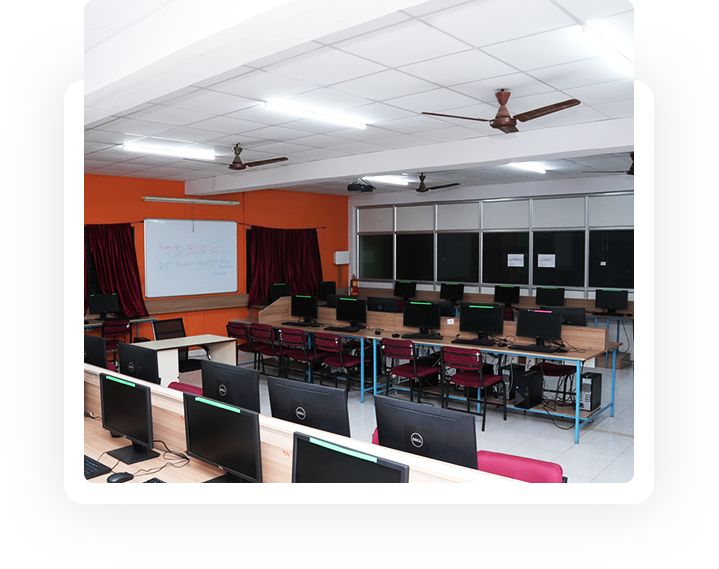
The CSE (IoT) Department offers extensive lab facilities that integrate both software and hardware for practical learning:
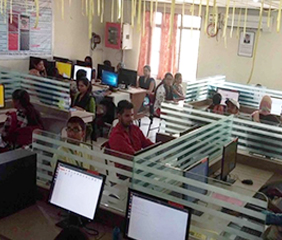
IoT Lab: Equipped with Raspberry Pi, Arduino kits, sensors, and actuators for end-to-end IoT application development.
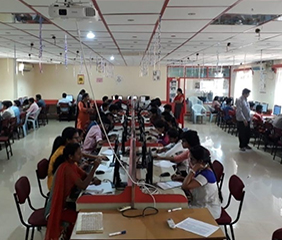
Data Structures Lab:Programming practice in linked lists, stacks, queues, trees, and graph algorithms.

Java Programming Lab: GUI design, exception handling, multithreading, and object-oriented programming using NetBeans/Eclipse.
IT Workshop Lab: Hands-on experience in hardware assembly, dual OS installations, and basic troubleshooting.
Programming for Problem Solving Lab: Foundation in C programming covering control structures, functions, arrays, pointers, and file operations.
Placements Highlights - 2021 - 25

72
Campus Interviews Conducted

9
Programs Available for the Students

46.38L
Highest Package 46.38LPA in Amazon

434
Successful Campus Placements
Our Tap Recuiters







Advisory Board Members
Head of the Department
Dr. M. V. Vijaya Saradhi
Professor, Dean (Gov’t Relations & Academic Grants) & HoD
Department Faculty
Dr .K . Raghupathi
Assistant professor
Mrs .Ch. Srivatsa Alivelu Mangatayi
Assistant professor
Mr. V . Veeresh
Assistant professor
Students
Ms. Belide Bhavani
IV CSO
Mr.Dasari Damien Posnett
III CSO
Ms. Naraboina Vineel Krishna
IV CSO
Ms. Madduru Rohana
III CSO
Parents
Mrs. G. Annapurana
S.A Social Teacher, ZPHS BHEL
Mr. Balongni Srinivas
Lab Technician, ESI
Venkatesh Billa
Senior Control Management Specialist, WellsForgo
Professional Bodies Members
Mohammed Jaffer Pasha
Senior Technical Trainer, TASK, Telangana
Wg.Cdr.Srinivas
Regional Coordinator, CSI Hyderabad Chapter
Employers
Mr. K Sahadev
CEO, Soham Academy of Human Excellence
Mr. J Ravindra
Project Director, IRAM Technologies
Mr. Phani Kishore
CEO and Co-founder, Gyana Astra Pvt. Ltd.
Devulapalli Sai Pavan
Founder & Technologist, DYIS Private Limited
Mr.Prasad Anumula
Founder and Director, Risk Guard Enterprise Solutions OPC Private Limited.
Alumni
Mr. Thella Karthik
Student
Ms. Lopelly Preethi
Student
Roll Of Honour

Chenagoni Sharath
H : No : 21AG1A6912
BATCH : 2021-2025

Ravilla Vasavika
H : No : 20AG1A6952
BATCH : 2020-2024
Events & Activities
No upcoming events found.
Frequently Asked Questions
Wondering what to expect from your chosen branch of engineering? Explore these FAQs to learn more about academics, labs, placements, and beyond.
What is the focus of the CSE (IoT) programme at ACE?
The CSE (IoT) programme combines core computer science subjects with specialisation in the Internet of Things, preparing students to design smart, connected systems using sensors, embedded programming, and real-time data processing.
What technologies and tools are taught in the IoT curriculum?
Students gain hands-on experience with microcontrollers (Arduino, Raspberry Pi), IoT platforms (ThingSpeak, Blynk), embedded C, Python, cloud integration, and networking protocols like MQTT and HTTP.
Are there dedicated labs for IoT-based learning?
Yes, the department includes a fully equipped IoT lab where students prototype smart applications and build real-time systems using hardware and cloud technologies.
What kind of projects do students work on in this program?
Students work on practical solutions in areas such as smart homes, healthcare monitoring, industrial automation, and environmental sensing—often as part of capstone projects or tech fests.
What are the career opportunities after graduating in CSE (IoT)?
Graduates can pursue roles like IoT Developer, Embedded Systems Engineer, Firmware Developer, Cloud IoT Analyst, or continue with higher studies in AIoT, robotics, or smart systems.